
The Nevada Department of Transportation (NDOT) manages hundreds of miles of highway across one of the US's fastest-growing states. Their Las Vegas team operates a Traffic Management Center - coordinating with emergency services and highway maintenance when incidents occur on the network.
Through close collaboration with NDOT and the Las Vegas traffic management centre, we helped Waycare develop a new system of operator dashboards that drove dramatic improvements to operational response times.
The challenge.
At scale, speed of response can be treated as a design problem.
The operators weren't failing, the system they were working with was.
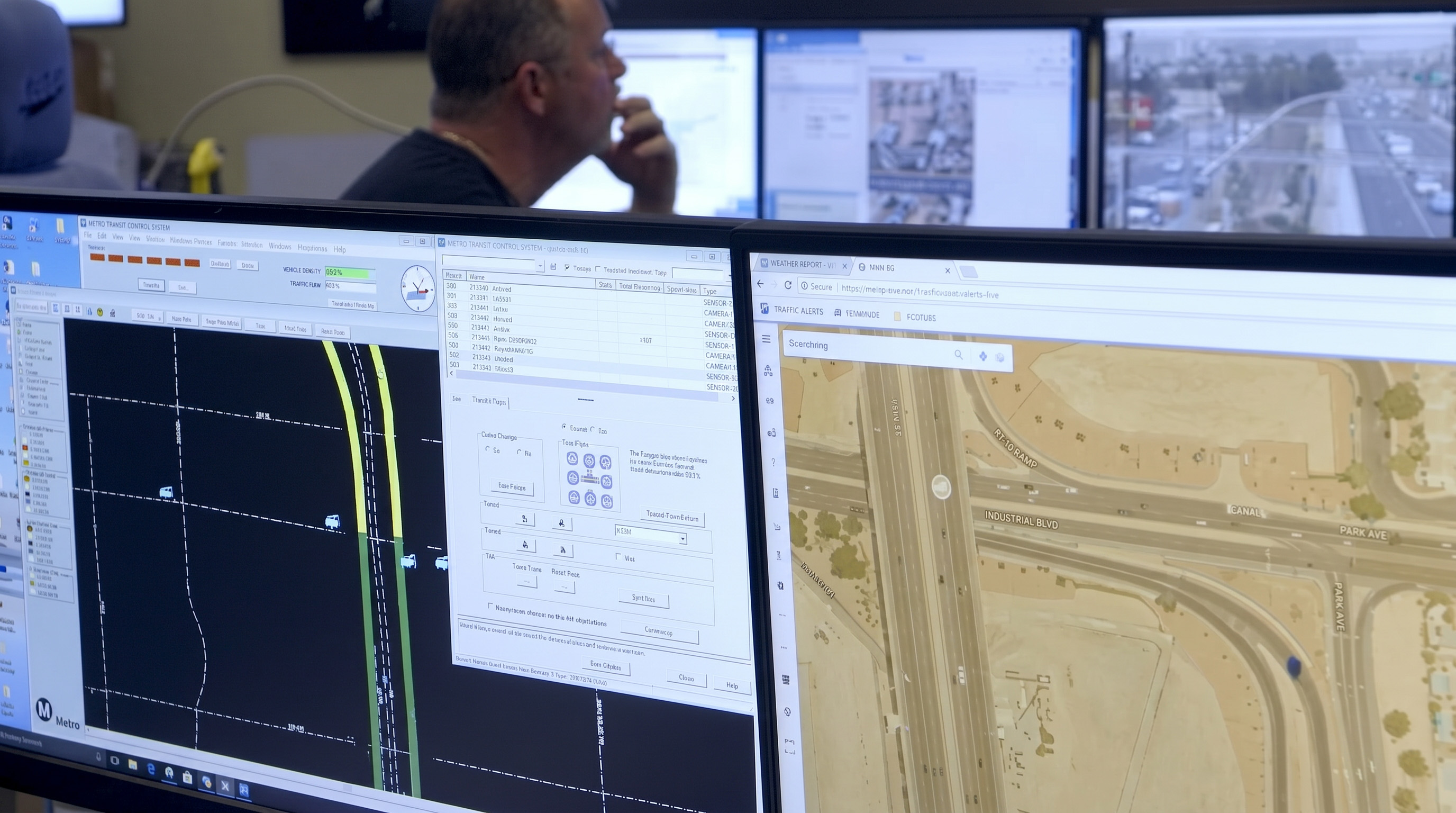
- Incident detection across hundreds of miles of road relied on cameras and human attention.
- Coordinating a multi-agency response meant constant radio communication, complex decisions under pressure, and no single source of truth.
- The gap between an incident happening and the public calling 911 to report it cost critical time - every time.
The approach.
We looked at how the teams actually worked - not how the process said they should - to understand the real root causes of the delays they were experiencing.
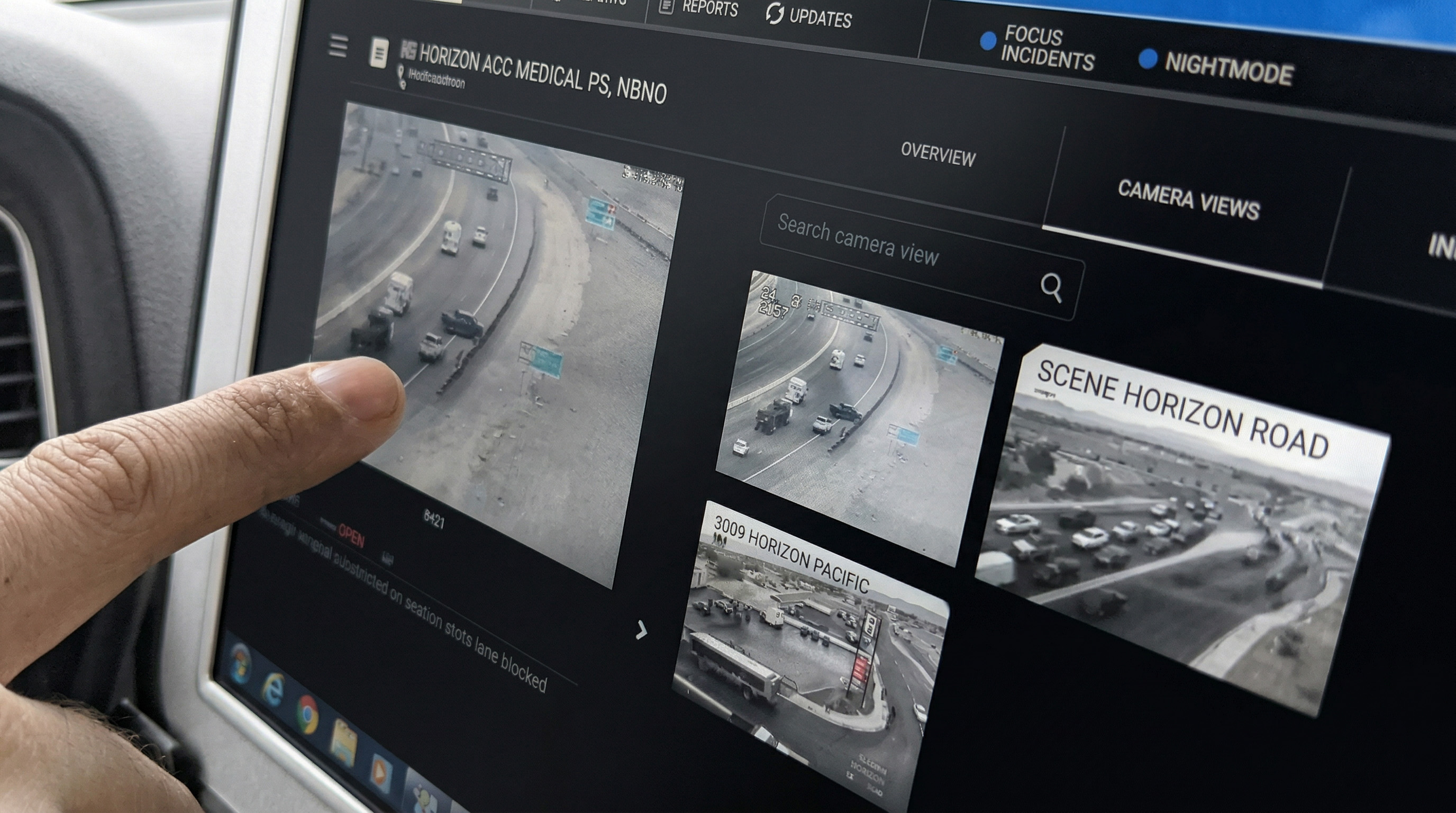
That analysis widened the picture. Alongside existing data sources, we incorporated real-time network views from social media feeds like Waze, new sensors, and vehicle telematics - dramatically broadening the available information. But with multiple agencies sharing one operational picture, and radio chatter already constant, adding more data without adding clarity would have made things worse.
The design challenge was certainty - ensuring operators could act with speed and confidence, not hesitation.
The solution.
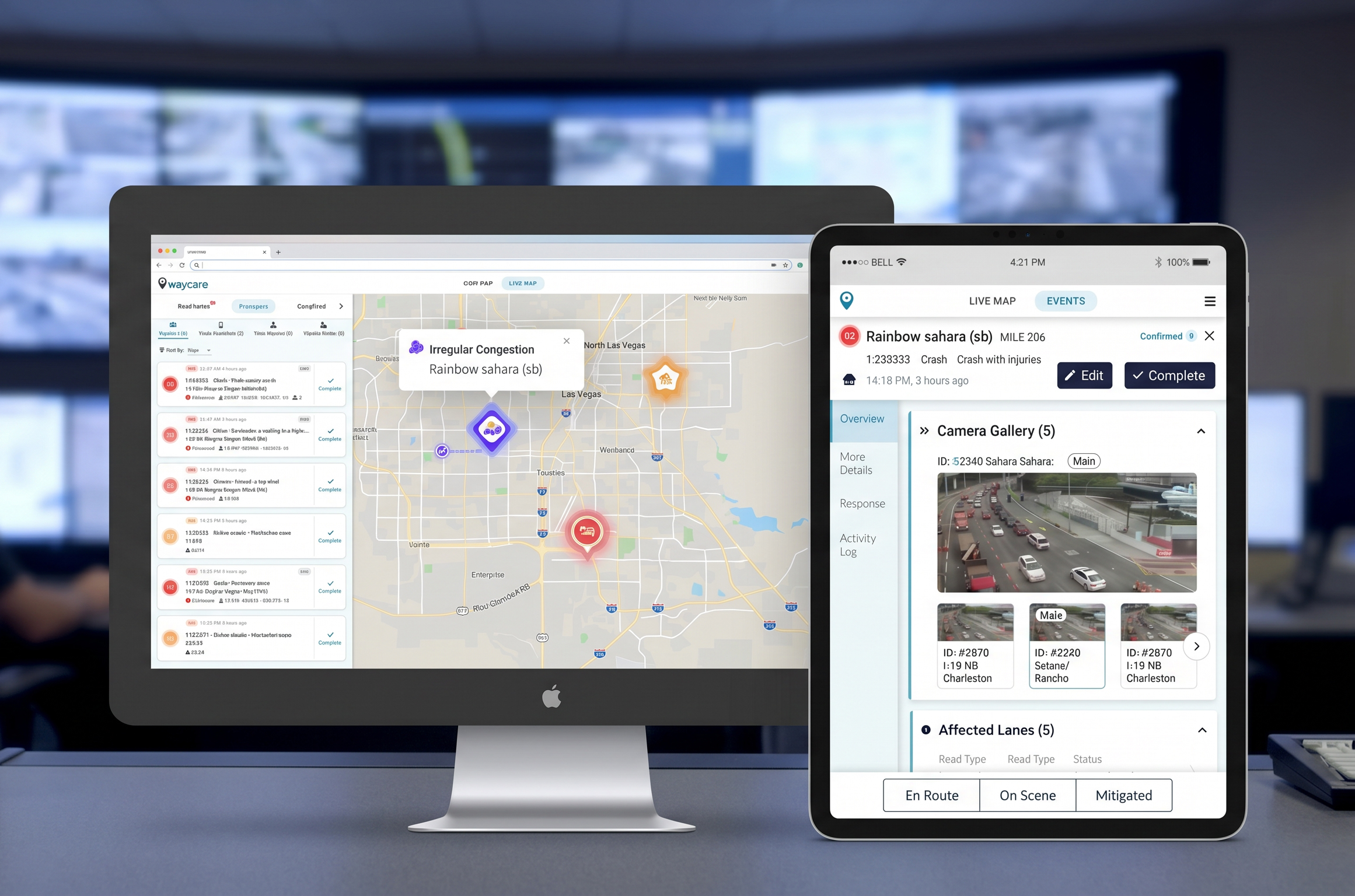
The Waycare platform gave NDOT and its partner agencies a shared operational picture for the first time. Previously, these agencies were housed in the same facility but had no collective platform for sharing real-time incident data. Critical information stayed siloed, response times suffered as a result.
The platform aggregates data from multiple sources in real time:
- In-vehicle telematics
- Connected infrastructure
- Crowdsourced feeds from Waze
- Historical traffic data.
AI algorithms continuously monitor these data sources to detect anomalies and identify incidents as they develop - automatically alerting operators and triggering response workflows, rather than waiting for a 911 call or a camera operator to spot a problem.
For operators, this translated into clear, actionable dashboards built around the decisions they needed to make - designed in close collaboration with the TMC teams, dispatchers, and freeway service patrol who would use them day to day. Inter-agency communication, previously dependent on constant radio contact, was streamlined into the platform itself. One picture, one workflow, one single point of truth -shared across every agency with a role in the response.
The outcomes.
The dashboards saw high adoption from the outset. The results followed.
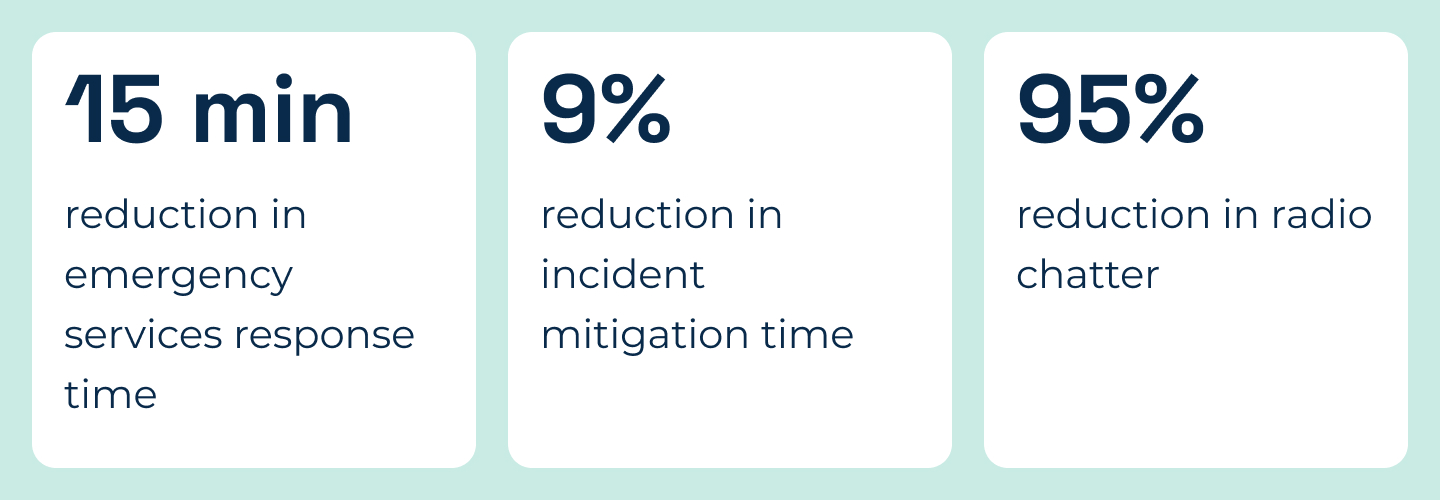
- 15-minute reduction in emergency services response time.
- 9% reduction in incident mitigation time.
- 95% reduction in radio chatter.
That last number matters as much as the first. A 95% reduction in radio chatter isn't just an efficiency gain - it's a signal that the system gave operators the clarity to act without needing to ask. Less noise, faster decisions, better outcomes.
The technology made it possible. The design made it work.