A global pharmaceutical company had developed a product with strong patient outcomes. The business case for going to market was clear. What wasn't clear was how to get there without the cost of patient training making the numbers unworkable.
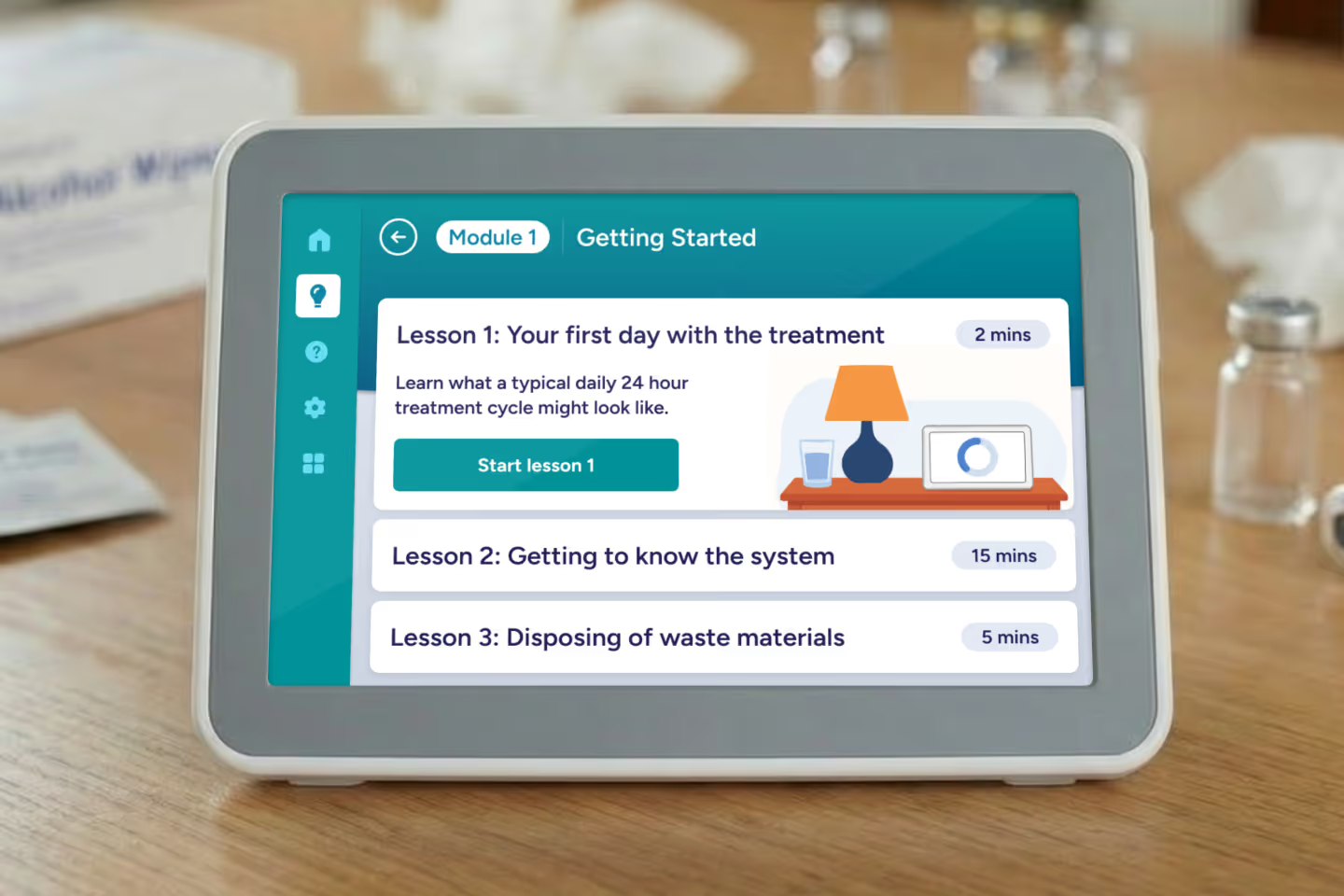
Through an iterative agile design and testing process we helped them produce an innovative digital self-learning platform for their patients, dramatically reducing the cost to the business and burden to the nurses involved.
Note: Due to ongoing project confidentiality, medical device appearances and UI have been modified from the versions going to market.
The challenge.
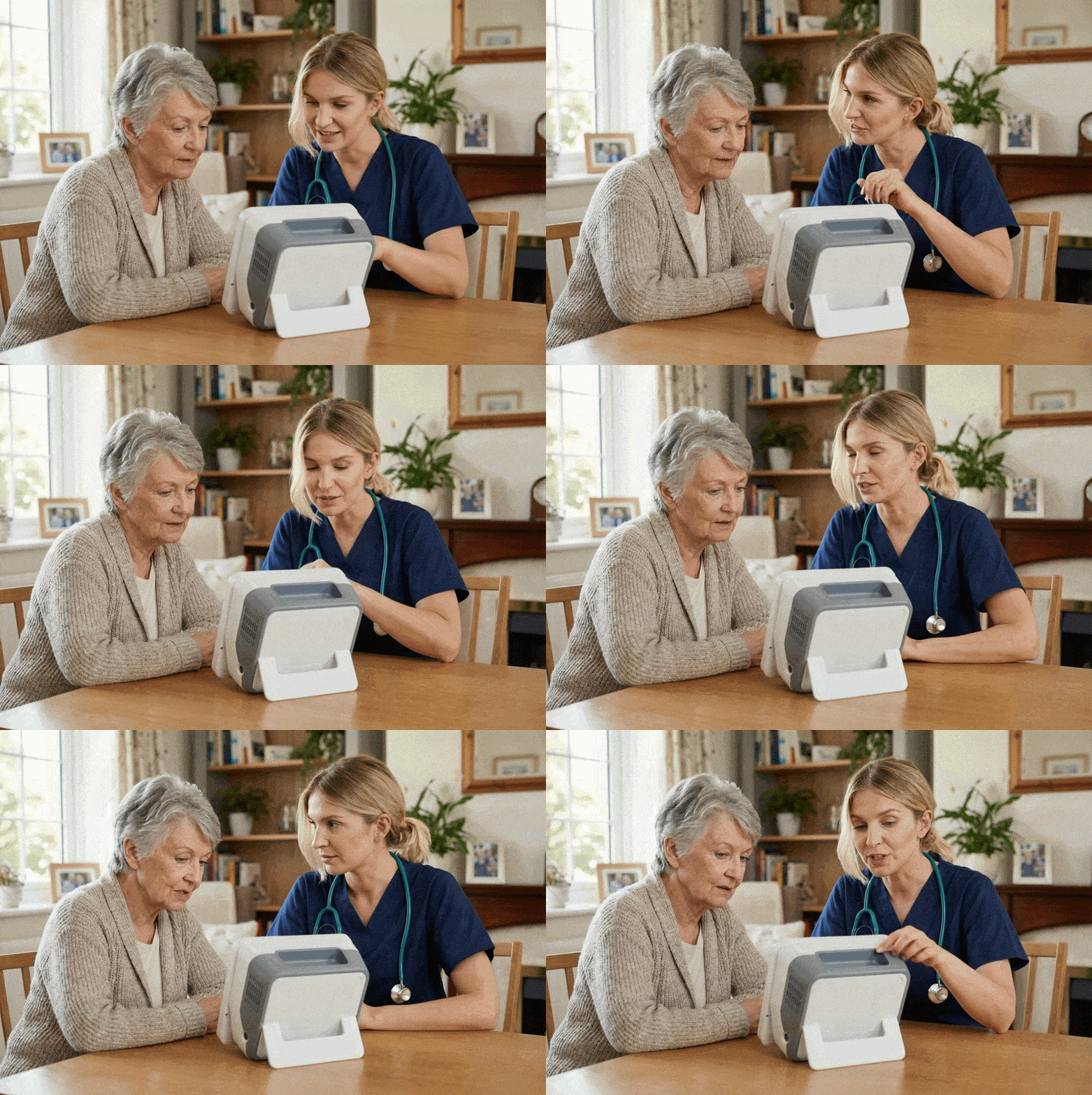
Getting patients confidently and safely onto a new pharmaceutical product requires training. For this client, that meant deploying specialist nurses for four visits per patient - at around $400 a visit. With 25,000 new US patients projected in the first year, the forecast training cost was $10 million annually*.
The training programme had been designed primarily to satisfy regulatory requirements, with nurses at the centre of every step. It worked. But it was expensive, difficult to scale, and left little room for nurses to focus on the clinical work they were best placed to do.
*Based on an average of 25,000 new patients per year in the US, and a cost of $1,600 per patient.
The approach.
We started with a straightforward hypothesis: patients and carers could learn to use this product themselves, with the right support in place.
To test it, we conducted an in-depth analysis of the training programme in full - the processes, the materials, the stakeholders, and the structural assumptions baked into the design. We spoke with nurses who had delivered the training, and drew on six years of direct experience with this patient population to understand how they learn and where they struggle.
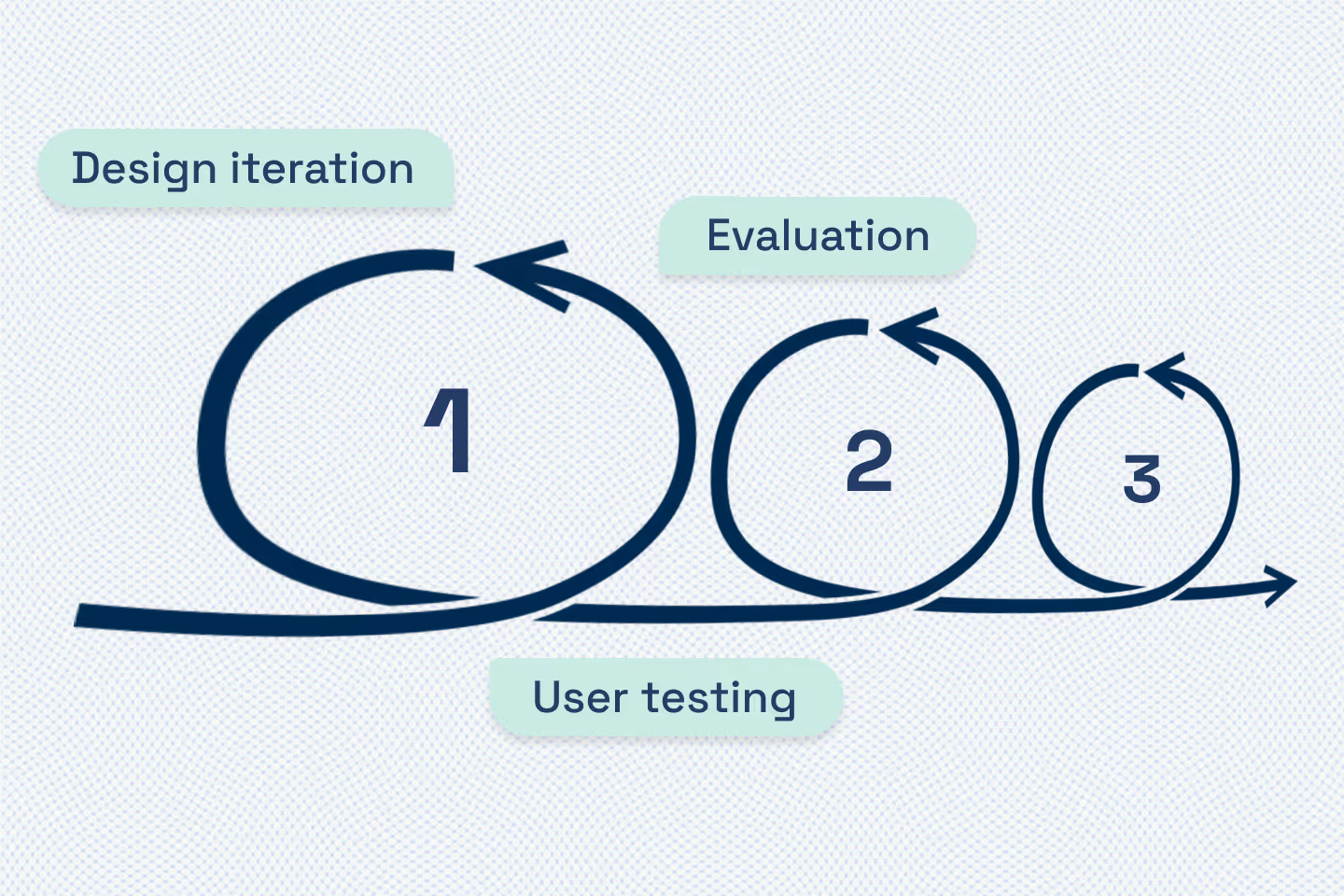
Working through three rounds of concept development, evaluation, and iteration, we built a clear and evidence-backed picture of what a self-learning programme could realistically deliver - and what it would take to implement it.
The solution.
The redesigned training programme blends physical and digital touchpoints to guide patients through a structured sequence that builds confidence gradually and contextually. Rather than waiting for a nurse visit, patients can progress at their own pace - with nurses stepping in to provide the kind of personalised clinical support that can't be systematised.
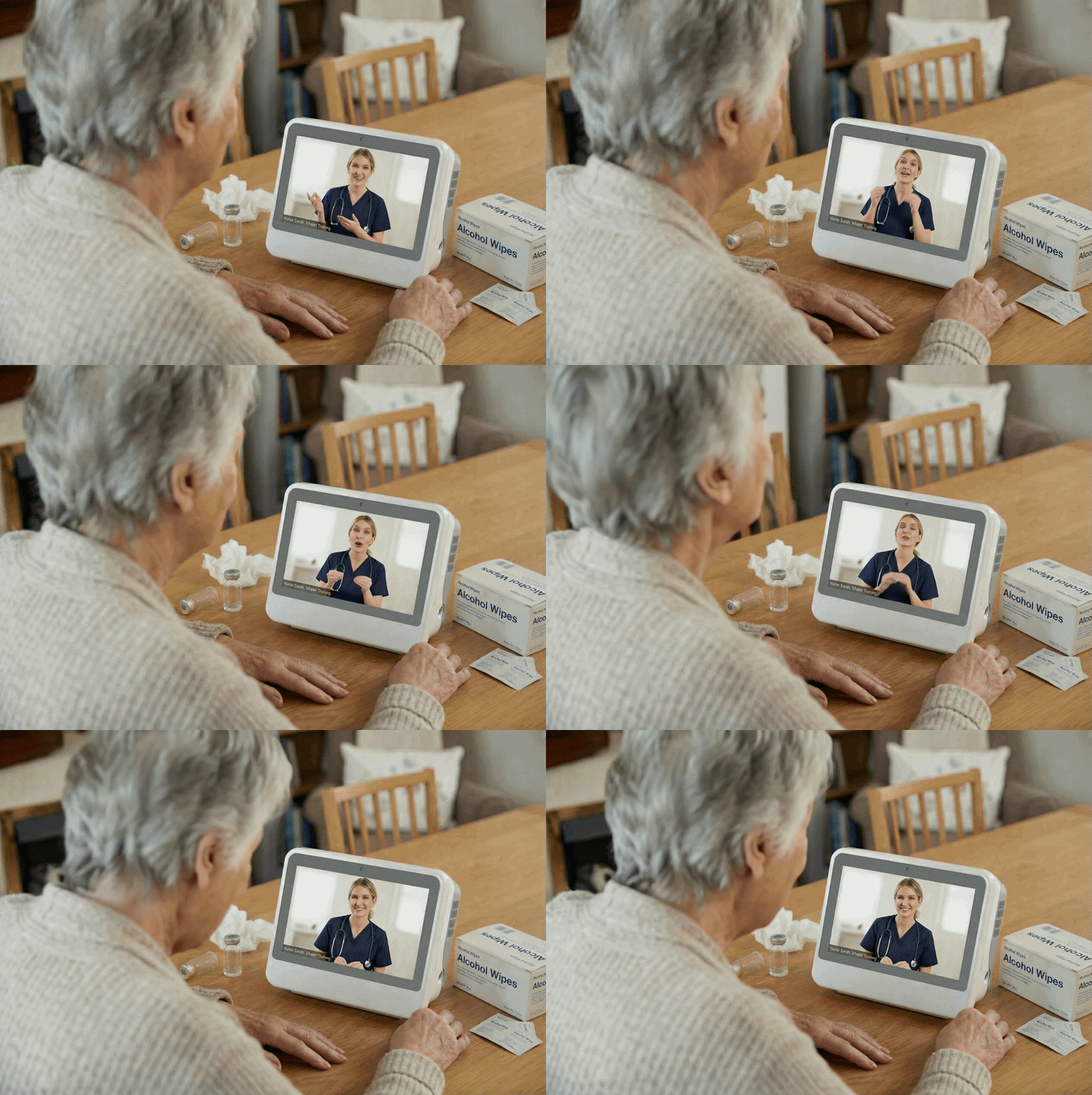
Giving patients autonomy through self-initiated learning, nurses gained more time to focus on patient-specific clinical support - and the business gained a clearer path to scaling rollout without scaling cost.
The outcomes.
We delivered a clear business case and implementation roadmap, backed by direct evidence from patients. The results were significant:
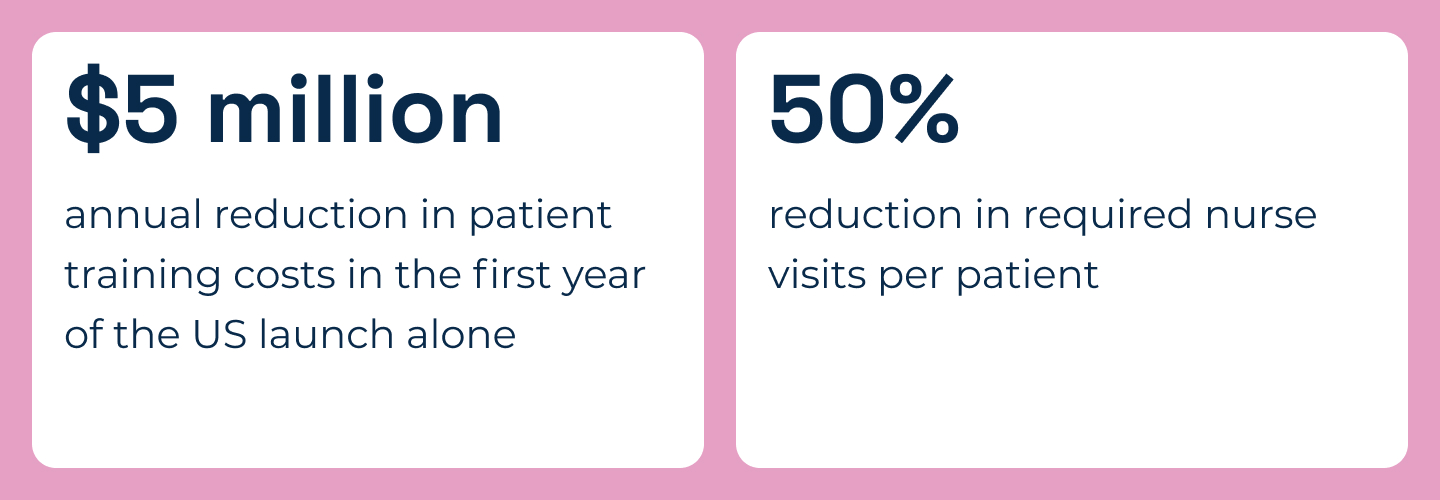
- $5 million in annual savings projected for the first year of the US launch alone.
- 50% reduction in required nurse visits per patient.
- 6-point average increase in patient confidence (from 2 to 8 on a scale of 1-10) after completing the self-learning programme.
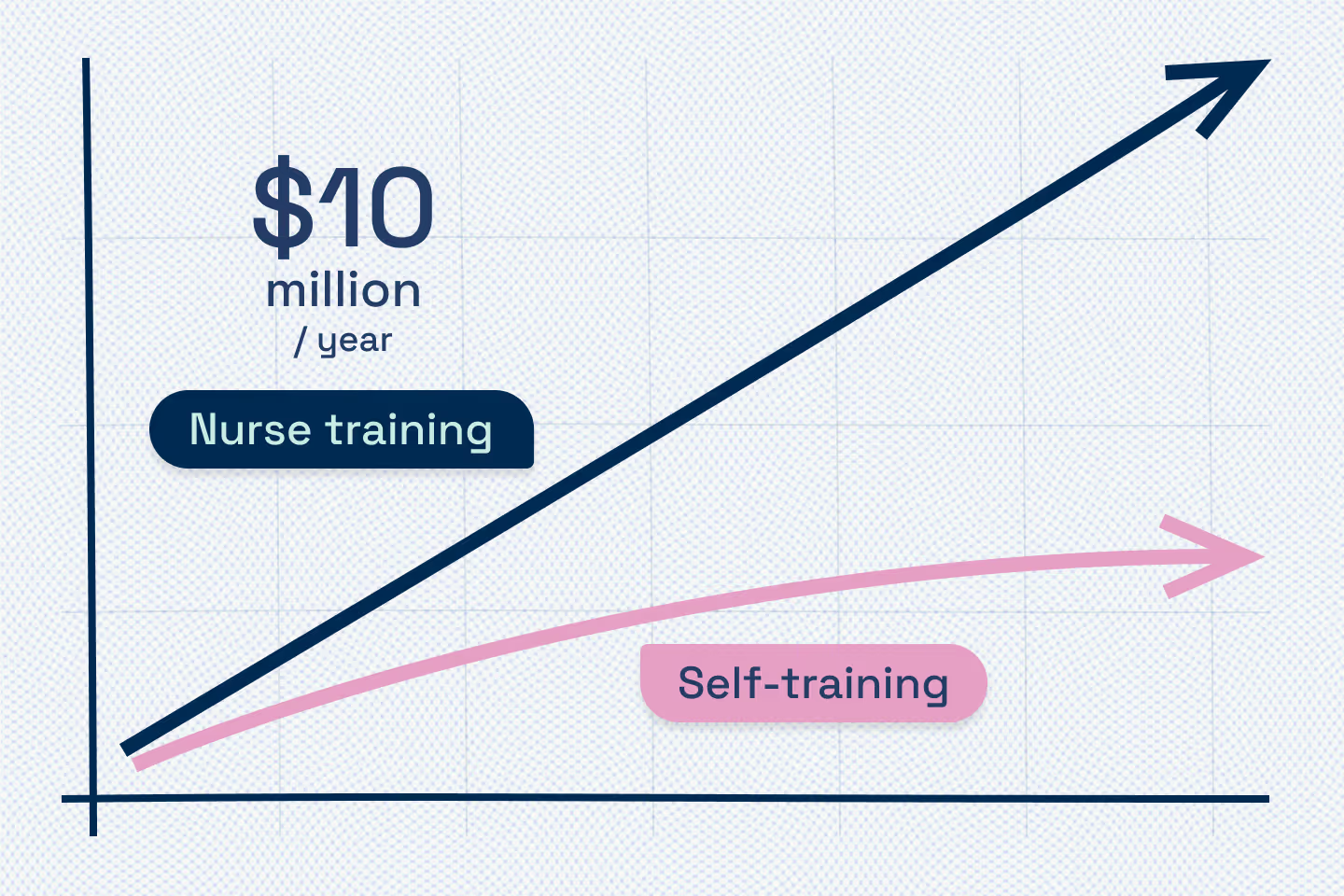
As the program matures, it is estimated that year on year savings will increase due to the optimisation of nurse’s time - removing the burden of technical training and allowing them to focus on improving clinical outcomes.
Training programmes generally exist to satisfy regulatory requirements - we designed this one to support the patients and nurses learnign to use the treatment, and in doing so, cut the cost of going to market in half.