
Imagine a great new coffee truck has just opened near your office. You've walked past it a few times and it looks good - decent reviews, good coffee, exactly the kind of place you'd want to make a habit of. The entrance sits at the far end of a small patch of grass, and there's a neat L-shaped paved path that takes you from your office, along the edge of the green, round the corner, right to it.
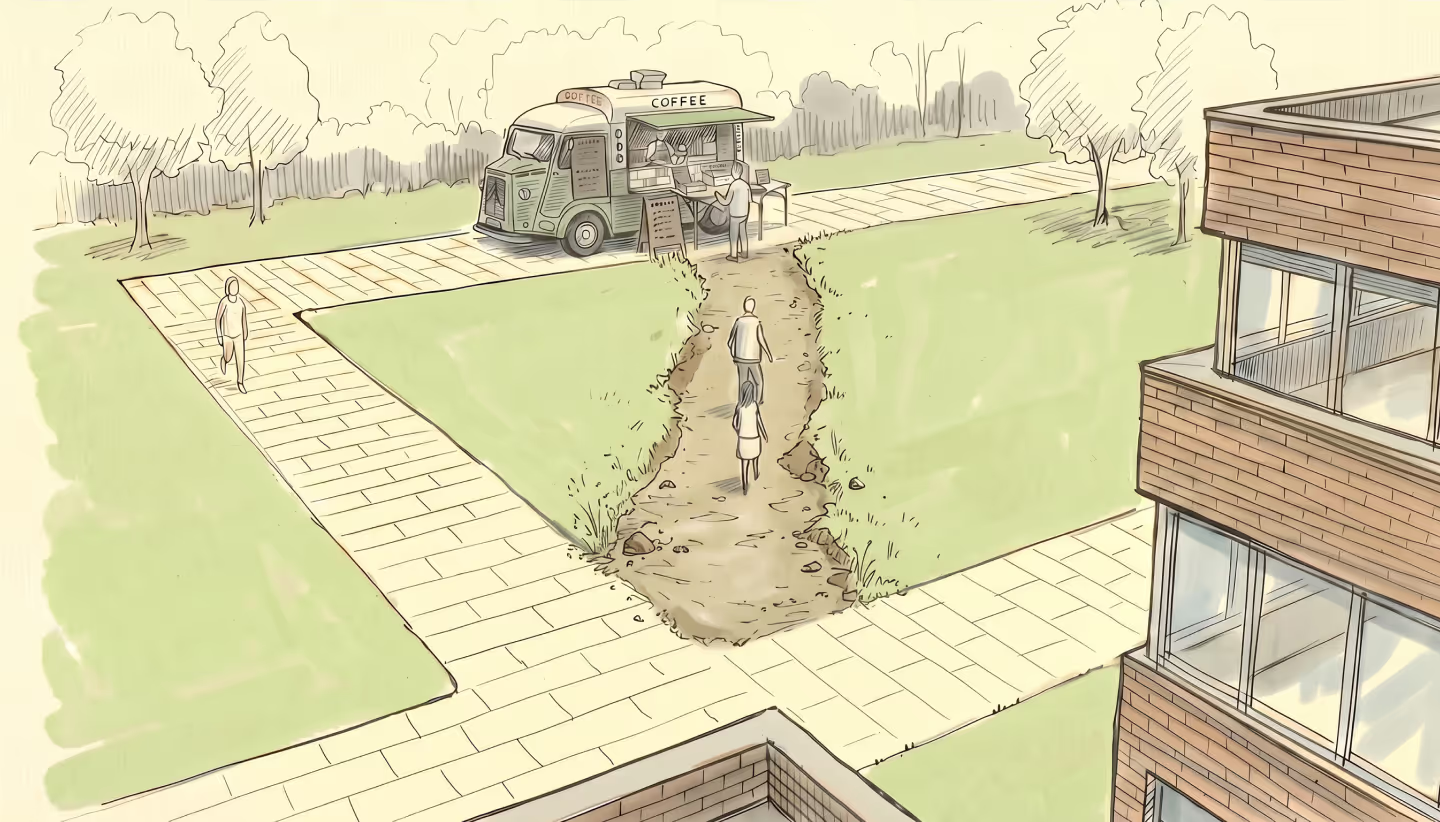
The problem is that the most direct route is diagonally across the grass, and within a few weeks of opening, a worn track appears. Not because your colleagues (and let’s be honest - you) are being deliberately awkward, and not because you don't want the coffee - it’s because the shortcut is obvious, it's faster, and it's simply the path that feels natural.
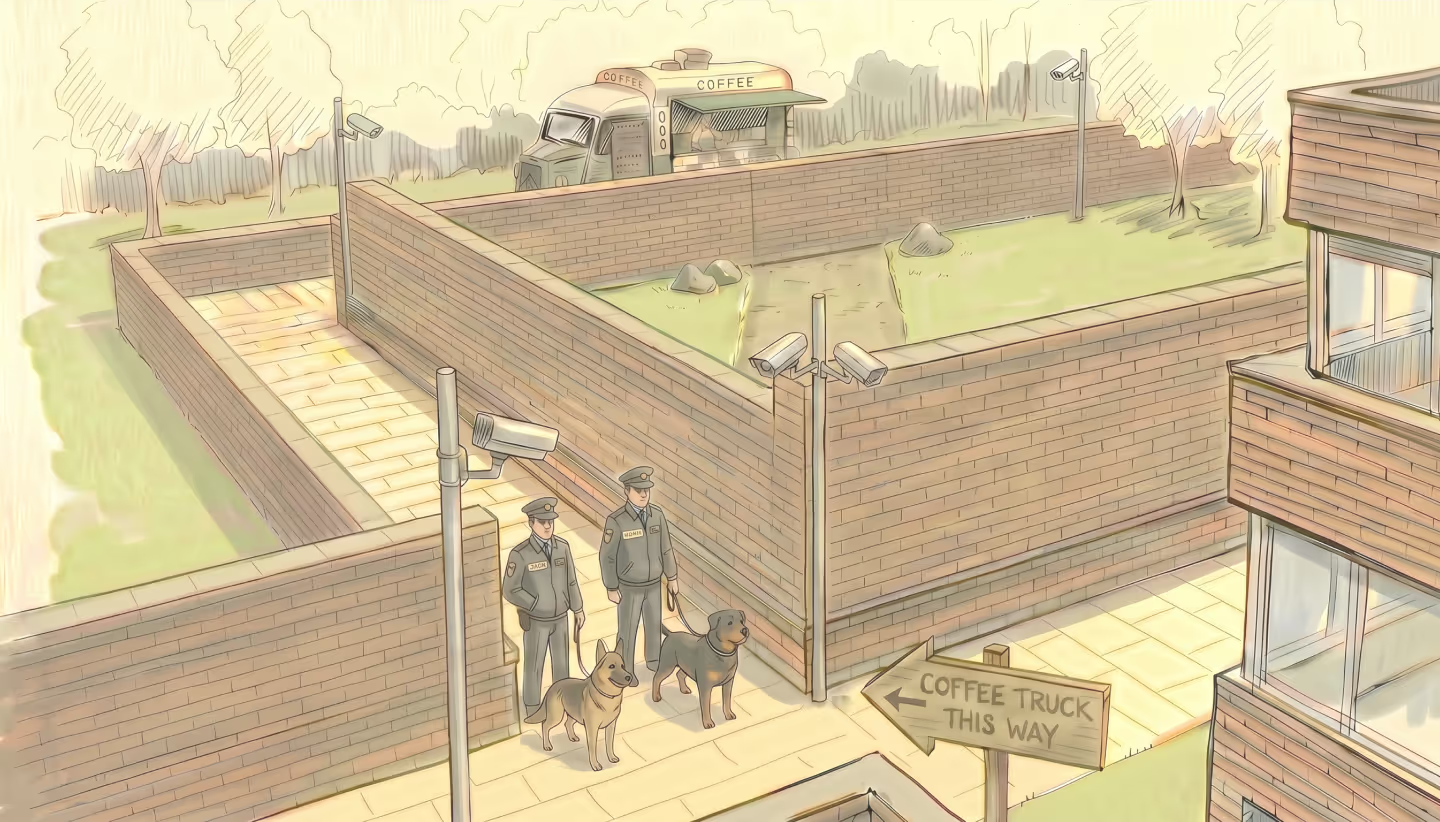
The city is annoyed by the grass getting all worn out, so the coffee truck owners add a low wall around the paved path. Then a sign. Then another wall when someone walks around the first. And slowly, almost without anyone noticing, the coffee truck starts losing customers - not to a bad review or a particular incident, but to the slightly easier place down the road that you don't have to think about getting into. The coffee might even be worse there. It doesn't matter. Getting there is frictionless, and getting to the good place increasingly isn't.
This is a (slightly silly) story about path design. But it's also, more specifically, a story about what happens when you build something without first understanding how the people you're building it for actually move through the world.
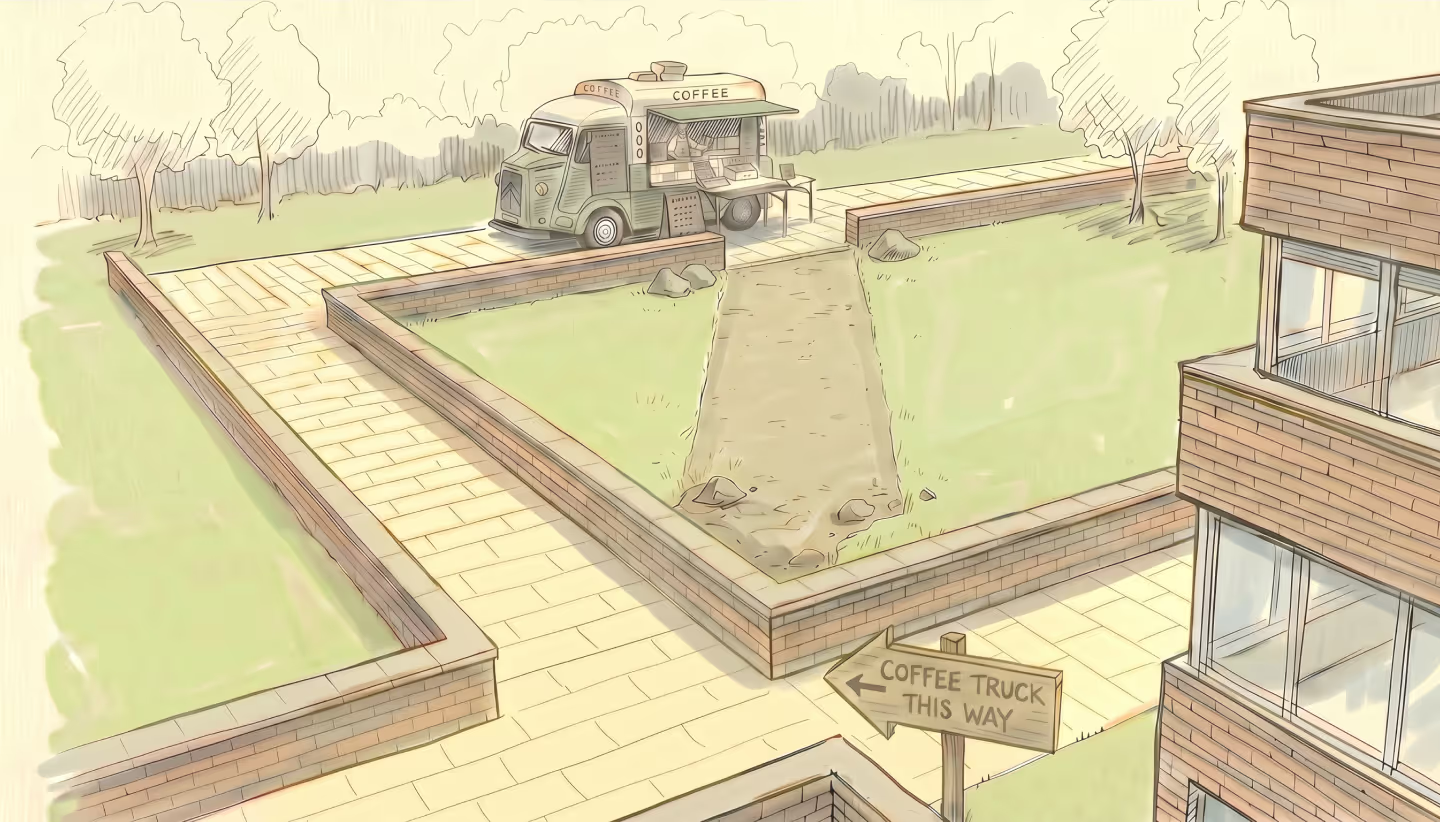
Enforcement is not a strategy
When a product or system isn't being used the way its creators intended, the instinct is almost always the same: tighten things up, add more guidance, make the correct path mandatory, and assume the problem is user behaviour rather than the design of the experience itself.
The trouble with this approach is that users who can't find a natural path through something don't stop wanting the destination - they find another way to reach it, or they find a different destination entirely. The friction doesn't disappear; it just becomes the reason they leave. In digital products, this plays out constantly and in ways that are easy to miss until the damage is done. A workaround gets quietly shared around a team, a platform that requires mandatory training sees engagement collapse the moment the training ends, a tool gets replaced by a simpler competitor that asks less of the people using it, even if it does less too. The barrier-adding instinct treats that gap as a behaviour problem to be solved through pressure. Strategic design treats it as a design problem to be solved through understanding, and the difference between those two approaches matters enormously. Is all of this worth it for a cup of coffee?
Working with behaviour, not against it
The coffee shop's mistake wasn't adding barriers. It was not asking, early enough, why people were cutting across the grass in the first place. If they had, the answer would have been obvious: the L-shaped path was inefficient, and the natural line to the door was diagonal. The right response wasn't to block the shortcut - it was to pave it.
This is the central idea behind strategic design. Rather than designing around how you'd like people to behave, you start by understanding how they actually do behave, and then you build the most direct, frictionless path to the outcome you both want. In product and digital transformation contexts, this means approaching the work with a fundamentally different set of questions. Not "what features do we need to build?" but "what does success look like for the people this is built for, and what needs to change in how they work or live to make that possible?" Not "how do we get users to follow the correct process?" but "what is the natural path, and how do we make that the right one?"\
That shift - from designing around behaviour to designing with it - is where the difference between products that get adopted and products that get abandoned tends to originate.
Pave the desire path first
Back to the coffee truck near your office. The owners who struggled weren't bad operators - they just solved the wrong problem. They saw a behaviour they didn't want and tried to stop it, when what they needed to do was understand it. The worn track across the grass wasn't a problem to be blocked; it was information about where the path should have been all along.
The version of this story that ends well is simple. The owners notice the desire path, commission a diagonal path, and the problem disappears entirely. No barriers, no lost customers - just a route that goes where people were already going, made deliberate and permanent. The coffee truck gets the footfall it deserves, and its customers get their coffee without having to think about it.
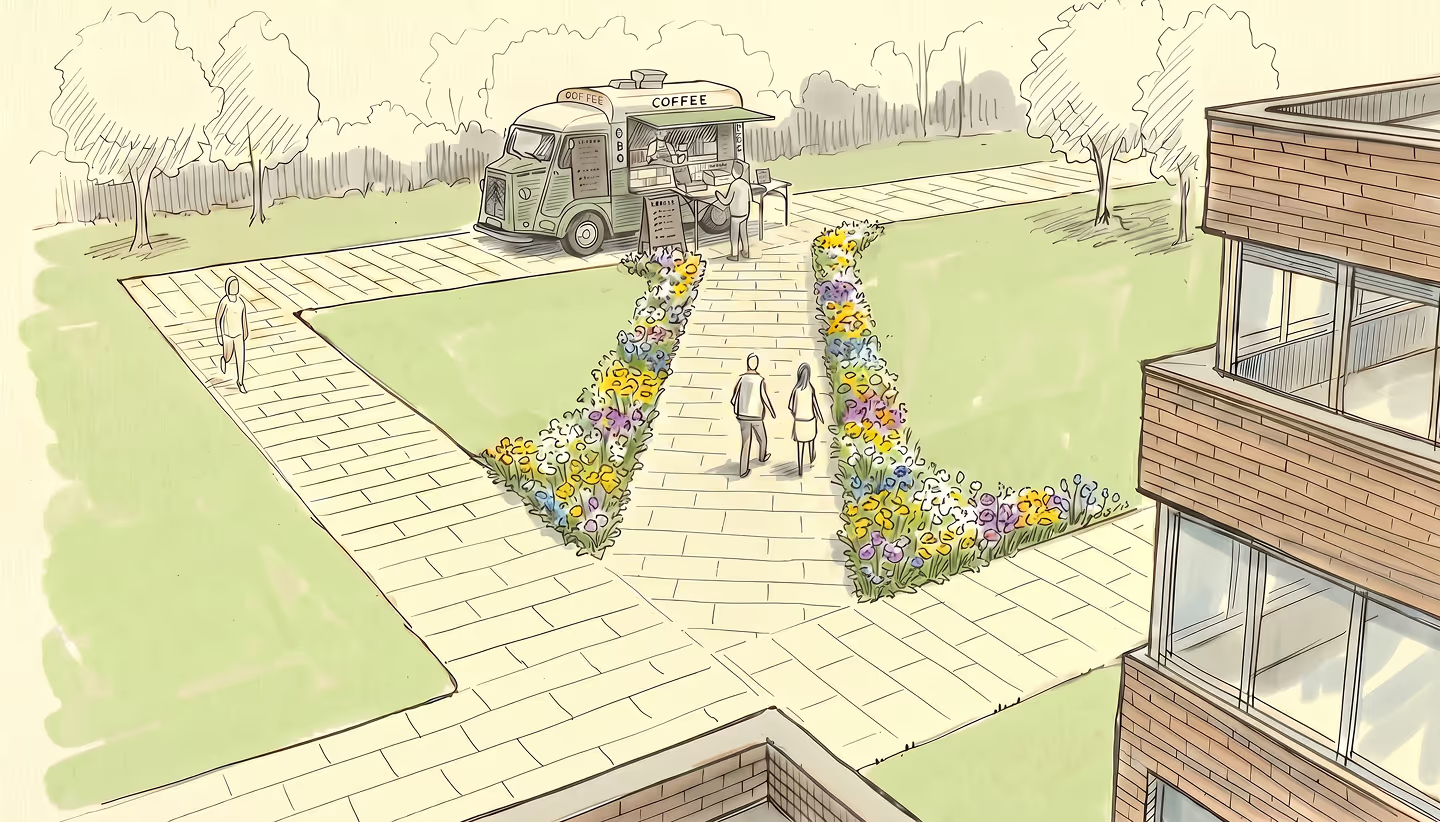
This is what strategic design makes possible before the truck even serves their first cup of coffee: not just building the right thing, but building it in a way that fits how people actually work, decide, and move through the world. The products that achieve lasting adoption aren't always the most sophisticated or the best resourced - they're the ones built with a clear-eyed understanding of the path their users were always going to take, and the discipline to design that path deliberately, from the very beginning.
————————————————
If you're working through a digital transformation or product build and want to think through how strategic design could help pave the desire path for your users, Book a discovery call and let's start solving the problem together.